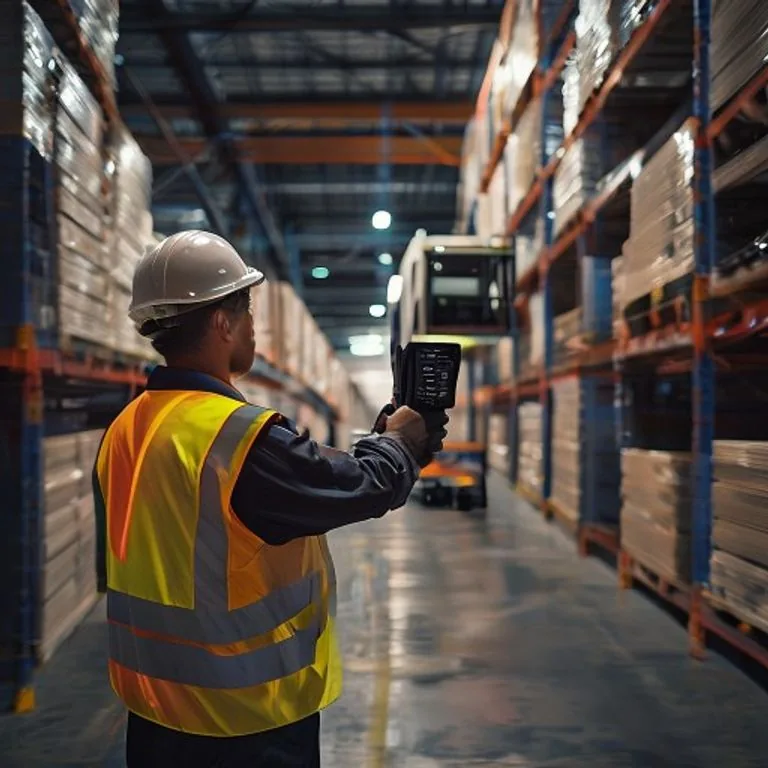
Zebra scanners for work that runs all day
A scanner used a few thousand times a day is a different device from a scanner at a counter. Zebra makes both, and the choice is about how often, how far and in what conditions the scanning happens.
Four questions that decide the model
They can be answered in five minutes and they save a wrong order.
- How often per shift?At a few hundred scans almost any model will do. At thousands, the shape of the device and the position of the trigger start to count, because that decides whether someone still feels it at the end of the shift.
- From what distance?A label at ten centimetres asks for something different from a label on a pallet high in a rack. Long-range scanners cost more and are awkward in the wrong place.
- What happens when it drops?The drop height and the dust and water rating are in the datasheet and they are the most important numbers on the page. A consumer device in a case does not survive a warehouse shift.
- Is it a scanner or a computer?A scanner passes a code on to something else. A mobile computer runs the application itself. That difference decides the price, the management and whether you need a network everywhere work happens.
Which Zebra range belongs to which work
Five families that barely overlap, provided you start with the work.
Zebra DS range — handheld scanners
The general handheld for counter, dispatch and workbench, in versions from light duty to industrial. The most delivered range, and usually the right one when there is no special requirement.
Zebra LI range — linear scanners
Barcodes only, no 2D. Cheaper and faster where a QR code never appears, such as classic stock administration.
Zebra MC range — mobile computers
Scanner and application in one device, with keypad and screen. For warehouse work where someone carries the device the whole shift.
Zebra TC range — handheld terminals
Touch operation in a rugged casing, closer to a phone than to a scanner. For work with a lot of input and imagery: delivery, service, inspection.
Zebra RS range — ring scanners
Worn on the finger so both hands stay free. For picking where lifting and scanning alternate; this is the range that saves the most time per order.
How you buy it from us
The same device can be ordered anywhere. What comes with it differs, and that is where the money and the time sit.
- Buy or rentFor equipment that lasts years, buying is usually better value; with fluctuating numbers or a season, renting is calmer. The same equipment either way — the choice is about your situation and not about the product.
- Delivered ready to useConfigured, registered in management and tested before it ships. At larger volumes sorted per site or per user and delivered straight to the address.
- Warranty and replacement handledWe handle the warranty instead of sending you to a service number, and we track which serial number sits where and when cover ends. Where downtime costs money directly, we supply pre-configured spares.
- The old equipment goes back with usCollected, wiped to the standard and disposed of with certification, and you get the certificate. That belongs to the lifecycle and not to a separate job afterwards.
Lead time depends on the model and on the manufacturer. We quote the term the manufacturer gives and report it the moment it shifts, rather than naming a date that sounds good. Call +31 85 060 9347 or email info@itproposal.com.
See also
What this connects to.
Questions we get about this
The ones that come up most, answered briefly.
What is the difference between a Zebra scanner and a mobile computer?
A scanner passes a code on to something else; a mobile computer runs the application itself, with screen and keypad. That difference decides the price, the management and whether you need a network connection at every workplace.
Which range suits order picking?
The RS range ring scanners, because both hands stay free for lifting. They usually pair with a device on the belt or a terminal on the truck, and they deliver the greatest time saving per order.
Do you configure the scanners for our system?
Yes. The connection — as a keyboard, serial or through a driver — is set up and tested before the equipment ships. That is the difference between a scanner that works straight away and two days of configuring.
Tell us what you need, we work it out
Quantity, use and where it has to go. The model follows from that, and the quote follows from the model — with the lead time the manufacturer is giving at that moment.
Practical IT knowledge in your inbox
New guides on management, security and the workplace, written by the people doing the work. No sales talk, and you can unsubscribe in one click.