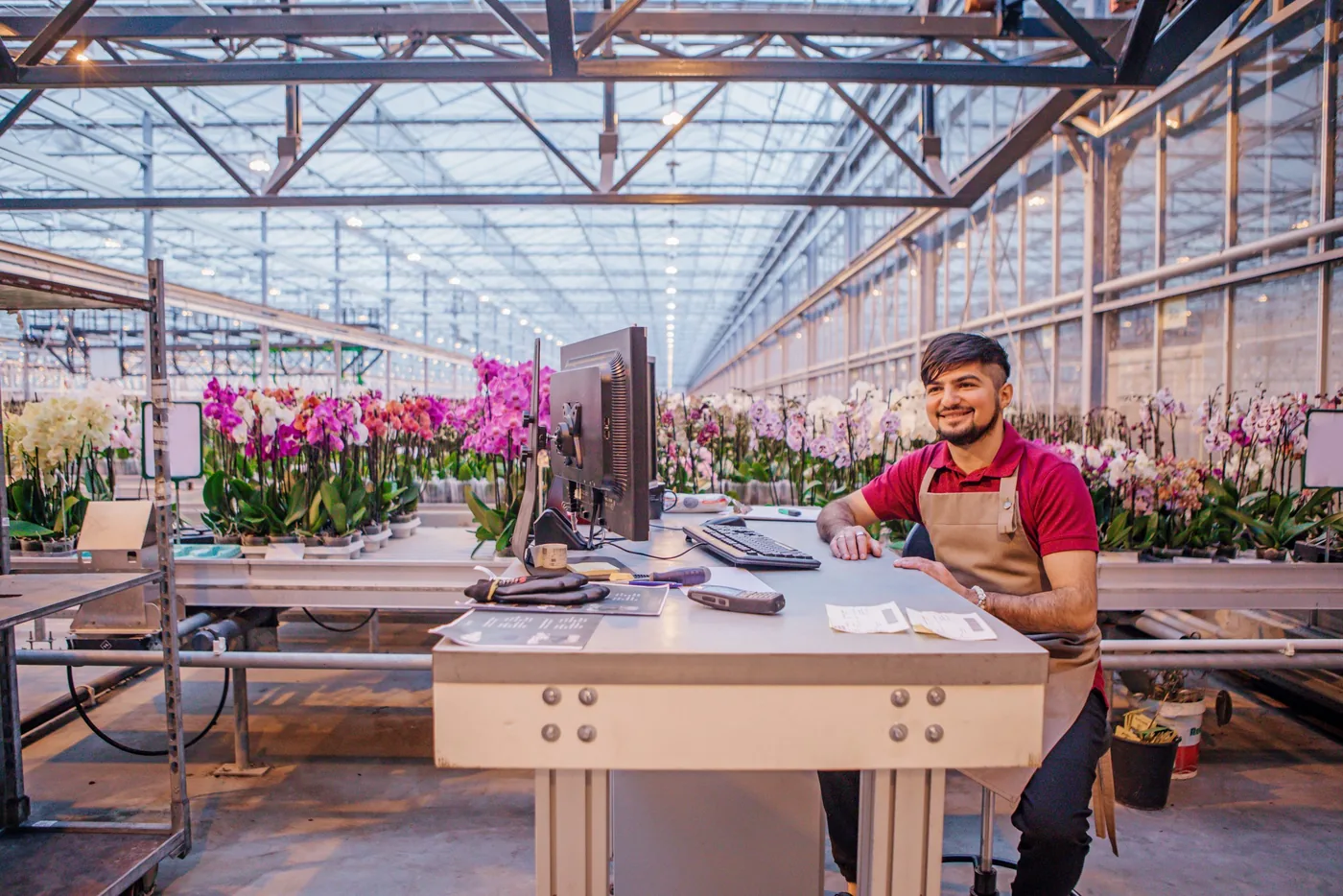
IT that survives water and soap
In a food business the IT sits in an environment that is hosed down daily, and it carries information a regulator can ask about. Those are two demands that do not meet anywhere else: equipment that takes the environment, and records that stand up to a recall.
Two demands that coincide nowhere else
One comes from the cleaning crew, the other from the law. Both land on the same equipment.
The first demand is physical. A production area is cleaned with water, foam and sometimes a pressure washer, and that happens every day. An ordinary industrial PC or scanner does not survive it: it does not fail on day one but in month eight, and then it fails during a production run. Equipment in these zones should carry a protection rating that matches the cleaning regime, and that is a choice at purchase and not a fix afterwards.
The second demand is administrative. Since Regulation (EC) No 178/2002 every food business in the EU has to be able to show who supplied an ingredient and to whom a batch went: one step back, one step forward. In a recall that is not theory but a clock: the faster you know where a batch ended up, the smaller the quantity that has to come back. That answer comes out of systems hanging together, and its quality is exactly as good as the weakest link in that chain.
What our part is
We manage the IT around it: the network in the production area, the workplaces and handhelds, the link between the floor and the office, the backup and the recovery. What the process control system does stays with the supplier who delivered it and is allowed to touch it. Where those two meet, we record who signs for what, because that is where the time disappears during a fault.
Separating office from floor matters here for the same reason as elsewhere in manufacturing, with one difference: a line that stops on perishable goods costs not only time but raw material. That shifts the trade-off on what has to be redundant.
Temperature and the cold chain
Where products stay chilled or frozen, temperature monitoring is part of the quality record. Those measurements come from sensors, travel over the same network and land in a system that has to keep them. A fault in that path is not an IT incident but a gap in the file, and it only surfaces at an inspection. We take those points into the same monitoring as everything else, with alerts arriving at the same service desk.
What we take on in a food environment
You choose what you need. It all falls under one contract, one report and one point of contact.
- Equipment matched to the cleaning zoneTerminals, scanners and printers with a protection rating that matches the cleaning regime, and labels that stay on a wet pack.
- Separation between office and productionControl and measurement systems in their own zone, with links that are named and do not quietly grow because a project was in a hurry.
- Availability of the systems at the lineWhere a fault costs raw material and not only time, the recovery time is fixed in advance and there is failover for the systems driving production.
- Records for traceabilityThe chain of measurements and batch records keeps running and is retained, so one step back and one step forward is an export and not a hunt.
- Temperature monitoring includedChillers and freezers sit in the same monitoring as the rest, with alerts arriving at the same service desk as a network fault.
- Cover for the hours you actually runAcross shifts and through the season. The response time should sit on those hours and not on office hours when the line is idle.
How we take over a food environment
In this order, because a surprise during the handover here costs a production run and sometimes a batch.
Walk along during a run and during cleaning
The second matters most. What a device at the line genuinely endures is not visible during production but afterwards.
Map the chain of data
From scale and sensor to the system holding the batch. This step almost always surfaces a link running on one PC nobody had looked at in years.
Agree windows and response times
When may work happen on which side and what is critical during a run. That goes into an SLA in plain language, with out-of-hours cover where shifts are worked.
Adjust on what we see
The reporting shows faults, turnaround times and recurring causes per line and per site. Those figures exist to reduce downtime and are usable towards your customer.
The services that come up most here
These building blocks come up most in a food environment.
Looking further
Recognise the picture but work in another industry? Then look at the other sectors.
Questions we get about this
The ones that come up most, answered briefly.
Can you supply equipment that survives the cleaning?
Yes, and that is a choice at purchase rather than a fix afterwards. What we need to know is how cleaning is done: with a cloth, with foam or with a pressure washer. That sets the protection rating, and a terminal not chosen for it fails not on day one but in month eight.
Do you manage the process control as well?
No. What the line supplier delivered and is allowed to touch stays with them. We manage the IT around it: the network, the workplaces, the handhelds, the backup and the recovery, and we record where the boundary sits so it is not a discussion during a fault.
What does traceability mean for our IT?
That the chain from scale and sensor to the system holding the batch has to keep running and has to be retained. In a recall, the speed of that answer decides how large the quantity is that has to come back, and that answer is exactly as good as the weakest link in the chain.
Tell us what stops during a run
Name the systems the line and the batch records hang on and how cleaning is done. We build the equipment, the separation and the cover around that.